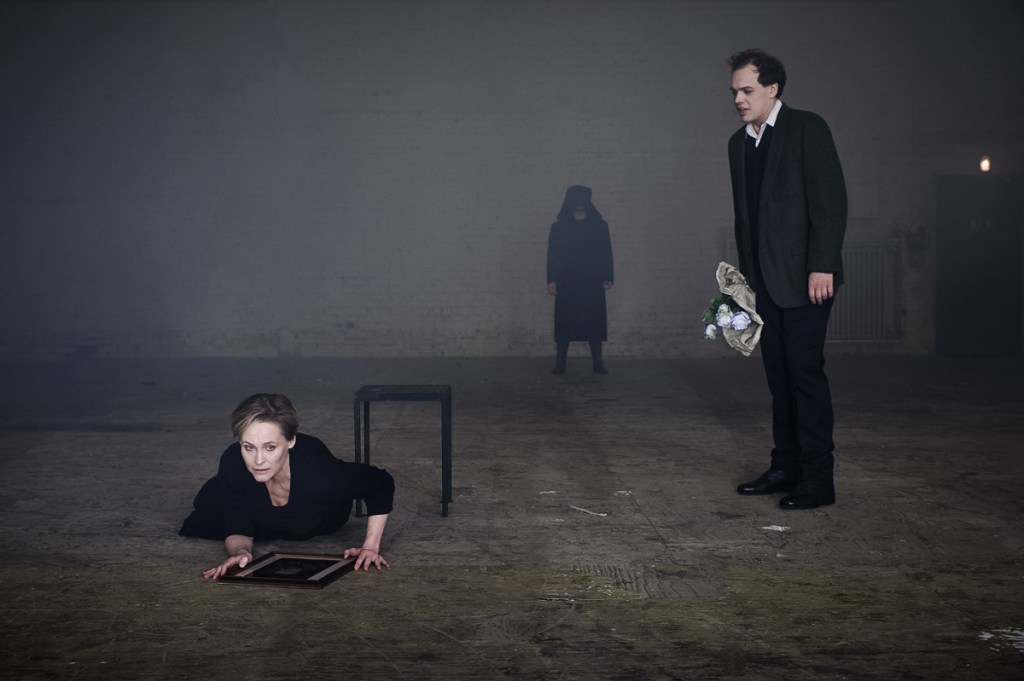
Cursed, driven, shunned… Richard Wagner’s first contact with the character of the rootless Dutchman was through a story by Heinrich Heine, romantic material spiked with a typical dose of Heine irony. Wagner paid little attention to Heine’s broader story, which presented the Dutchman only as a tangential sideline. Instead he immersed himself in the tale of the mysterious mariner, which became the subject of his first opera dealing with a hero’s search for a woman who can redeem him. The Dutchman, moving restlessly in a realm twixt Life and Death, meets Senta, a woman who appears equally alien and unattached to her current surroundings and is yearning to meet a virile character, the Dutchman, a figment of her imagination. Hers is a world of dream images, of fantasy, of obsessions and projections – a world that has long since lost touch with reality. And the person suffering most in all this is the huntsman, Erik, who is presented as perhaps the only genuinely loving protagonist in the piece. Yet he is unable to reach the other key characters, who evaporate in their own dreams. Written in 1841 and first performed in Dresden in 1843, Wagner’s DUTCHMAN breaks with the grand opéra style of RIENZI, his previous work, and embraces the tradition of German romantic opera as expounded by Weber and Marschner. Yet despite the heavy influence of the zeitgeist, DUTCHMAN presages Wagner’s evolution as a musical dramatist. And this is the first time that Wagner’s central theme, redemption through love in the face of death, stands at the core of his work. Director and choreographer Christian Spuck, who impressed audiences at the Deutsche Oper Berlin in 2014 with his production of Hector Berlioz’s DAMNATION OF FAUST, now returns for his second spell in the Bismarckstraße, teaming up once again with General Music Director Donald Runnicles. [Premiere: 7 May / Further performances: 11, 16, 20 May; 4, 10 June 2017]

 OPERA20.ORG